

In the event of an automobile collision, the noticeable impact, such as shattered glass and crushed metal, often provides a clear picture. However, the true damage is not always immediately apparent. In fact, there are often times when injuries due to automobile accidents are not immediately evident but will emerge days or weeks later. Injuries to yourself can often go unseen, leaving you with lingering pain and discomfort that can affect your daily life.
In New Brunswick, especially around areas with heavy intersection activity, driving can be hazardous, especially during rush hours. This often happens because some drivers are distracted or frustrated. However, not all injuries after a car accident are easy to recognize. For instance, soft-tissue injuries and whiplash have a significant impact on an individual’s well-being. In this blog, we’ll explore some of the hidden injuries that can result from a motor vehicle accident and how they may be treated.
Common Hidden Injuries After Car Collisions
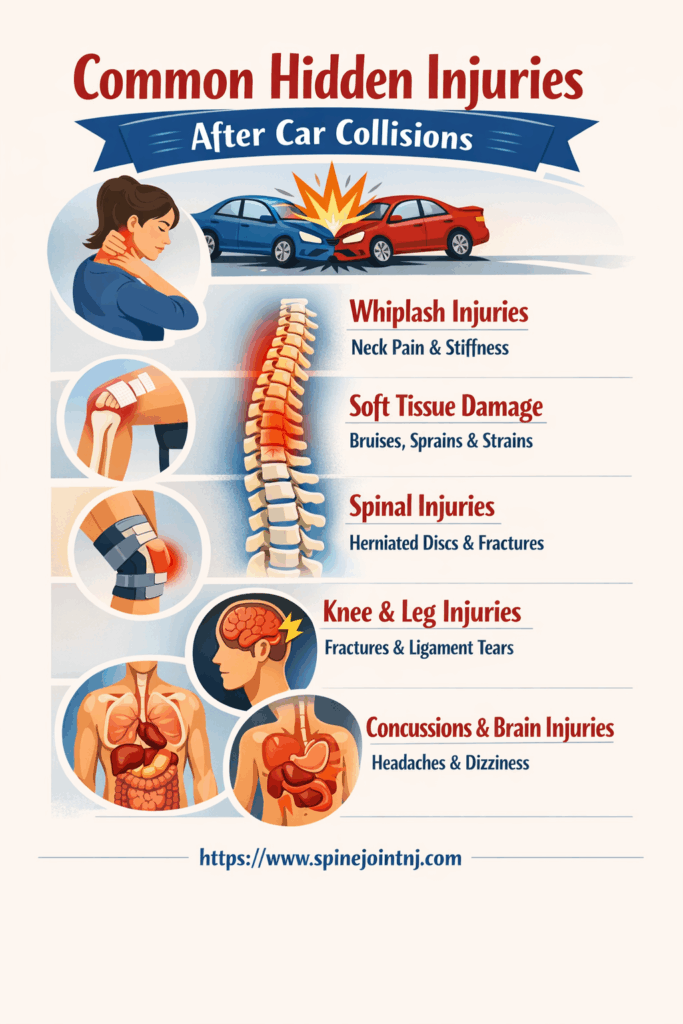
In motor vehicle accidents, various kinds of injury are often sustained, which may be invisible to the naked eye but can cause discomfort and long-term effects. In most accidents, the injured let minor aches and pains slide, not knowing they might be nursing something serious in the long run.
Some of the most common hidden injuries in car accidents are highlighted below.
1. Whiplash Injuries
Whiplash is a common hidden injury sustained in collisions. It results from a sudden jerk of the head caused by forward and backward movement. As a result, there is strain on the neck muscles and ligaments. Whiplash can cause neck stiffness, headaches, dizziness, and upper back pain. The effects of whiplash often manifest some time after a road accident, making them easy to overlook.
2. Soft Tissue Damage
Soft tissue injuries involve injuries to the muscle, tendons, and ligaments. Indeed, soft tissue injuries are often hidden and may include sprains, strains, or tears. Even though soft tissue injuries may vary from mild to severe, the pain associated with them is often prolonged even after the accident has occurred. Ignoring soft-tissue injuries may lead to chronic pain and mobility problems in the long term, ultimately requiring motor vehicle accident injury treatment in New Brunswick
3. Spinal Injuries
Spinal injuries can vary from minor aches and pains to serious injury. In some scenarios, the shock of a collision can compress the spine, causing pain, numbness, and/or paralysis. It is highly recommended to get medical attention if you are feeling back pain and/or nerve pain after a car accident.
4. Knee and Leg Injuries
In many cases of car accidents, particularly in rear-end crashes, the knees and legs are subject to impact with the dashboard and steering wheel. Even though some symptoms of bruising and dragging can be evident, there are other injuries, like torn ligaments and fractures, that are not immediately apparent. Cases of persistent knee pain and stiffness in movement could point to an occult injury.
5. Concussions and Brain Injuries
Concussions are a type of traumatic brain injury. This injury may occur during a collision. However, the victim may not lose consciousness. Symptoms may develop hours after the accident. These symptoms may include headaches, confusion, dizziness, and nausea. It is vital to take these injuries seriously. This is because mild concussions may lead to long-term health problems. Anyone involved in a collision should be concerned about their overall health for the first three days after the accident.
6. Internal Injuries
Internal injury can also be very dangerous since it may not be apparent at first. For example, if there are injuries to the internal organs such as the spleen, liver, and kidneys, it is possible that they were injured during a collision. Some of the symptoms of a person who has been injured can include abdominal pain, dizziness, nausea, and fainting.
How to Recognize and Address Hidden Injuries
It’s necessary, though, to point out the fact that even if you don’t bleed and your bones are not broken, you can still be hurt without your body showing it. Nevertheless, it might bring about serious problems later, so it is important to find out how you can determine if you have hidden injuries:
Source: Labinoti Law
- Delayed Pain: In some cases, you won’t feel any pain right away, but instead, hours or even days will pass before you feel it. If you feel new aches and pains a day or two after an accident, it’s a good idea to make an appointment.
- Changes in Mobility: If you are having trouble moving a part of your body and/or are feeling stiff and uncomfortable, but those sensations weren’t there right after the accident, this might indicate a possible injury.
- Dizziness or Nausea: A person may feel dizzy, lightheaded, or nauseated if they have a concussion or an internal injury. If any of these symptoms occur, seek immediate medical attention.
- Headaches: Headaches may persist or worsen and can be a probable symptom of whiplash or even a concussion.
- Bruising or Swelling: Bruising and swelling are often visible, but they may also indicate more serious soft-tissue injury and possibly fractures. Be aware of swelling that does not reduce within days.
In the event that you have been involved in a car crash and are displaying some of the symptoms mentioned above, it is of paramount importance that you seek prompt treatment. Most of the time, such cases are treated with physical therapy or chiropractic treatment. This is said to enhance full recovery and prevent future complications.
Start Your Path to Recovery Today
At Spine and Joint Pain Center, we know a motor vehicle accident can be physically and emotionally stressful. Hidden injuries are common, and their treatment and care might require a specialized approach, so even if you feel fine right after the accident, it is vital to be checked out. Our team is ready to begin the process of healing and restoring your quality of life with comprehensive care of injuries caused by car accidents.
Don’t wait for symptoms to get worse. If you have been involved in an accident, schedule an appointment with us today and take the first step towards recovery. Your health is our main concern, and we are here to get you back to your normal self.
Questions People Ask About Automobile Injuries
1. What is whiplash, and how do I know if I have it?
Whiplash occurs when your neck is suddenly jerked forward and backward, straining muscles and ligaments. Symptoms include neck pain, stiffness, and headaches. If you feel these after a car accident, seek medical care.
2. Can internal injuries be caused by a minor collision?
Yes, even minor accidents can cause internal injuries, especially to organs like the spleen or liver. Symptoms include abdominal pain or swelling. It’s essential to seek medical attention to rule out serious damage.
3. How soon do symptoms of soft tissue injuries show up?
Soft tissue injuries may not show symptoms until hours or days after the accident. If you notice swelling, bruising, or stiffness, it’s crucial to get evaluated to prevent long-term damage.
4. Is chiropractic care effective for treating post-collision injuries?
Yes, chiropractic care is effective in treating musculoskeletal injuries caused by car accidents. Spinal adjustments, therapy, and other treatments can relieve pain and improve mobility.
5. When should I see a doctor after an accident?
It’s advisable to seek medical care within 24 to 48 hours after a car accident, even if you don’t feel immediate pain. Delayed injuries can worsen without treatment.
6. Can a concussion cause long-term issues if untreated?
Yes, untreated concussions can lead to long-term cognitive issues, including memory problems and headaches. If you suspect a concussion, it’s vital to get an evaluation immediately to avoid complications.
